
Psychosocial support
In addition to traditional medical first aid, Czech Red Cross (CRC) volunteers are also trained in providing psychosocial support (PSS) and crisis intervention.
On this page, you will find how you can relatively easily support a person who is in a difficult life situation; what you can do for your own mental well-being; and how our people provide PSS in emergency situations.
I need support
I want to support another person
I want to look after myself
What is psychosocial support ?
Emergency situations have an impact on individuals, families and whole communities and put them under undue stress. They affect the well-being of those affected and those who come to their aid and can themselves be subject to increased stress. Psychosocial support techniques help those affected to navigate the difficult situation, stabilise themselves, activate their own coping strategies, make independent decisions and deal more quickly with their current difficulties. Early psychosocial support can prevent the development of severe psychological conditions and trauma. In humanitarian response, PSS is one of the easiest and almost immediately available ways to help.

Definition of psychosocial support
“Psychosocial support is a practice that helps individuals, families and communities affected by an unfavourable event to recover and adapt positively to a new situation. Its aim is to prevent long-term negative impacts and achieve optimal functioning of the individual in society. The process promotes social cohesion among those affected and leads to improved internal resilience.
Psychosocial support is the intersection of the psychological and social spheres.”
Each of us can offer a helping hand
Everyone can offer their time, a listening ear and a kind word in a difficult situation, as well as supporting another person in experiencing emotions, discussing their options with them and passing on information. All it takes is a little courage and trust in our own humanity.
For those who are interested in learning psychosocial support techniques in more depth, to be more confident in what to say and do in tense moments, there are expert books and courses. At the moment, the CRC is training its members in the basics of PSS as well as extension courses, and in the future plans to offer basic PSS courses to the public.
You can read about some basic PSS techniques and other training opportunities on this website. Remember, PSS is a skill and anyone can learn to give it correctly.
When will you use PSS?
PSS is not only part of the assistance during emergencies such as accidents, floods and security conflicts. Everyone can use its techniques in everyday life. When talking to a distraught neighbour who is going through a divorce; when there is a death in the family; a friend has lost their job; during a car accident; when we come across a flood or fire. Or simply when someone in our neighbourhood is having a really hard day and everything is falling apart. These are situations full of emotion where we want to support the other person, but often do not know how to do it.
Don't be alone!
Whether you want to help another person or you need help yourself, don’t be alone. Together we can do it.
I need support
I want to support another person
I want to take care of myself
I need support
Are you going through a difficult life situation, overwhelmed by emotions and thoughts and don’t know which way to turn? Don’t hesitate to contact a crisis line or a crisis centre.
You can also try some of the techniques for quickly calming down.
Quick calming exercises
Feeling overwhelmed? Are you very upset about something?
These few steps can help you calm down.
Exercise 1
- Stand up straight.
- Press your feet against the ground.
- Keep your shoulders down.
- Focus consciously on the centre of your body.
- Place your palm on your abdomen.
- Relax your muscles.
- Concentrate on your breathing.
- Breathe into your belly.
- Inhale slowly through your nose.
- Exhale very slowly and focus on what is happening to your breath.
Exercise 2
- Sit down.
- Place your feet on the floor.
- Breathe regularly.
- Name five things you see.
- Name four sounds you hear.
- Name three things that touch you or that you can touch.
- Become aware of two smells you can smell right now.
- Think of one taste that you feel on your tongue.
There are a number of crisis lines in the Czech Republic that you can contact if you find yourself in a difficult situation. Many of them are 24 hours a day, free of charge and most are anonymous. You can also call them when you need advice about something that is not about you, but about someone you know. Some lines are general, other lines specialise in different topics or groups of people. You can find a full list of these on the Ministry of the Interior website here or on the Czech Association of Helplines website here.
Every region of the Czech Republic has its crisis centre. Those are designated to help people who find themselves in difficult situations that they cannot manage themselves. It is a short-term help to show you available options. Usually, there are social workers, psychologists and lawyers working in the crisis centre to advise you or to guide to other specialists.
You can find a map of crisis centres, for example, on the Don’t Panic! website here.
For more great tips on what to do about anxiety, depression, suicidal thoughts, etc., see for example the app Don’t Panic, downloadable here.
You can also seek specialist help from a psychologist, psychiatrist or therapist, but be aware of appointment times.
How to support another person
When we see someone in a difficult life situation, we often may not know how to behave or what to say to help them rather than hurt them more. Think of it as just being a person who wants to support another person. You don’t have to be an expert to do that.
Also, take a look at some do’s and don’ts to help you handle supportive conversation better. If you want to learn specific techniques to help another person in crisis, join us at CRC and we will train you.
What to do:
- Provide safety and basic needs. Water/food, heat, toilet.
- Listen.
- Find out what has happened and what the other person needs.
- Acknowledge that what the affected person is experiencing is challenging.
- Believe that the affected person can manage their crisis.
- Do not be afraid to be silent.
- Ask open-ended questions.
- Support expressions of emotions, accept them.
- Summarise, repeat in your own words what the other person is telling you.
- Give information.
- Seek and engage the affected person’s own resources. Family, community, previous experiences.
- Make a plan.
- Call for help if you don’t know what to do.
- Pass on contacts for professionals if needed.
- Remember you can always call a crisis line for advice. You can also find more great tips in the free Mental First Aid app.
What not to do:
- Stop expressions of emotions.
- Make light of the situation.
- Interrogate.
- Judge, criticise.
- Make promises.
- Make big decisions that can wait.
- Talk excessively.
- Force someone to speak or make a decision.
- Force your own plan or your own idea of needs on another.
- Put yourself in the role of an expert (psychologist, therapist, etc.).
What not to say:
- Calm down.
- It will be okay.
- It could have been worse.
- You have to get on with your life.
- It was your fault.
- I know how you feel.
- You can get a new house/dog.
- Why did you do…, go…?
Psychohygiene or taking care of yourself
To be better prepared for your own difficult life situations or even to help others during such situations, you need to think of yourself first and foremost. It’s not selfish, it’s responsible. Only when you are calm yourself can you be a support for others. Pay attention to how you feel and find an activity that is suitable for you to help you fight stress. Take care of yourself and don’t be afraid to use the support system available. We only have one health.
You can find some tips to help you get well in the long term in our self-care cards.
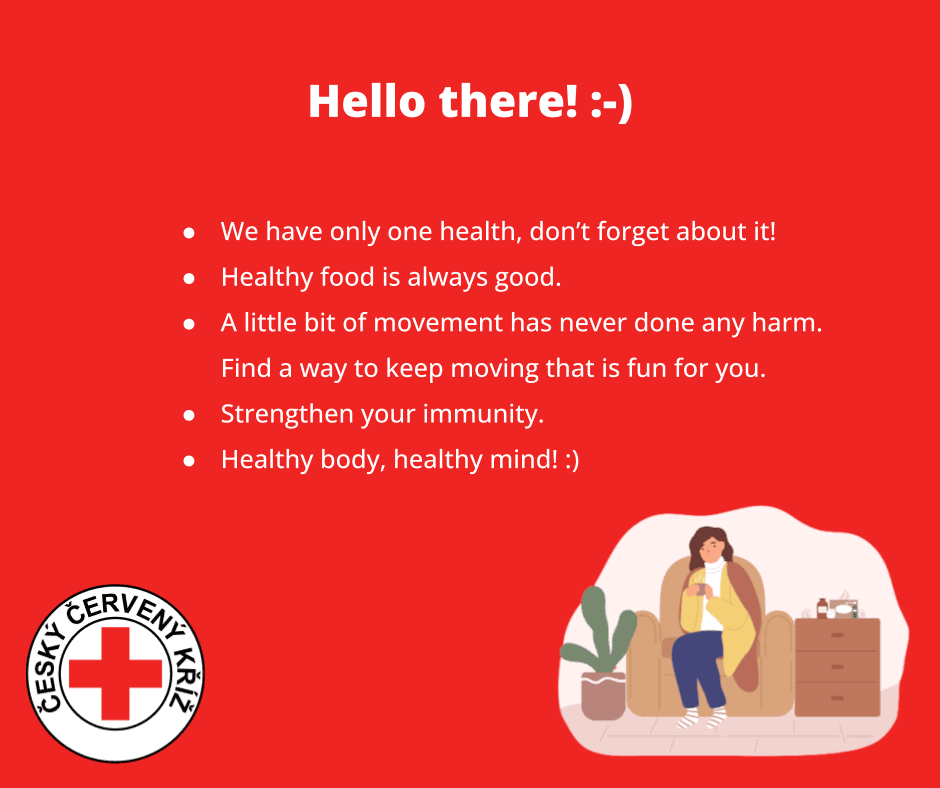
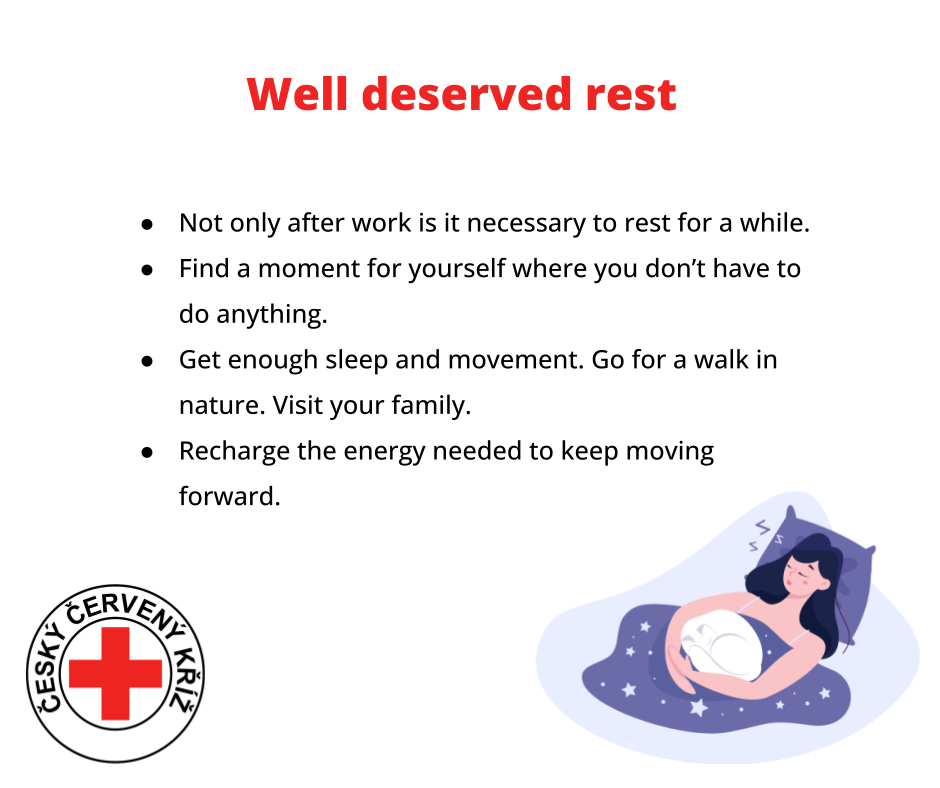
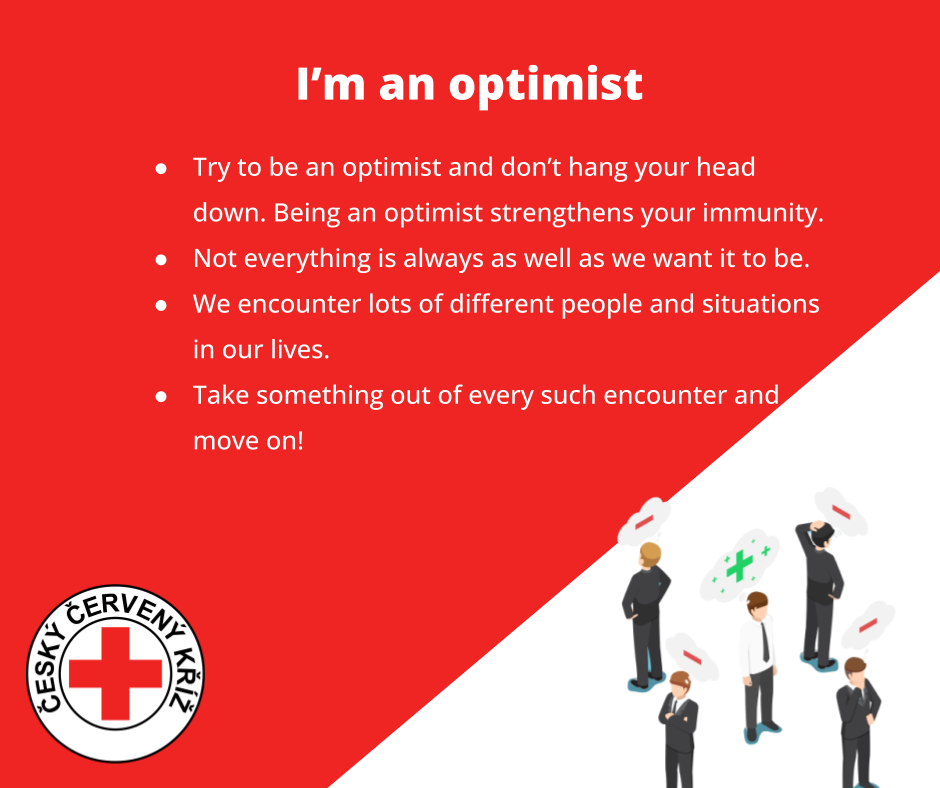
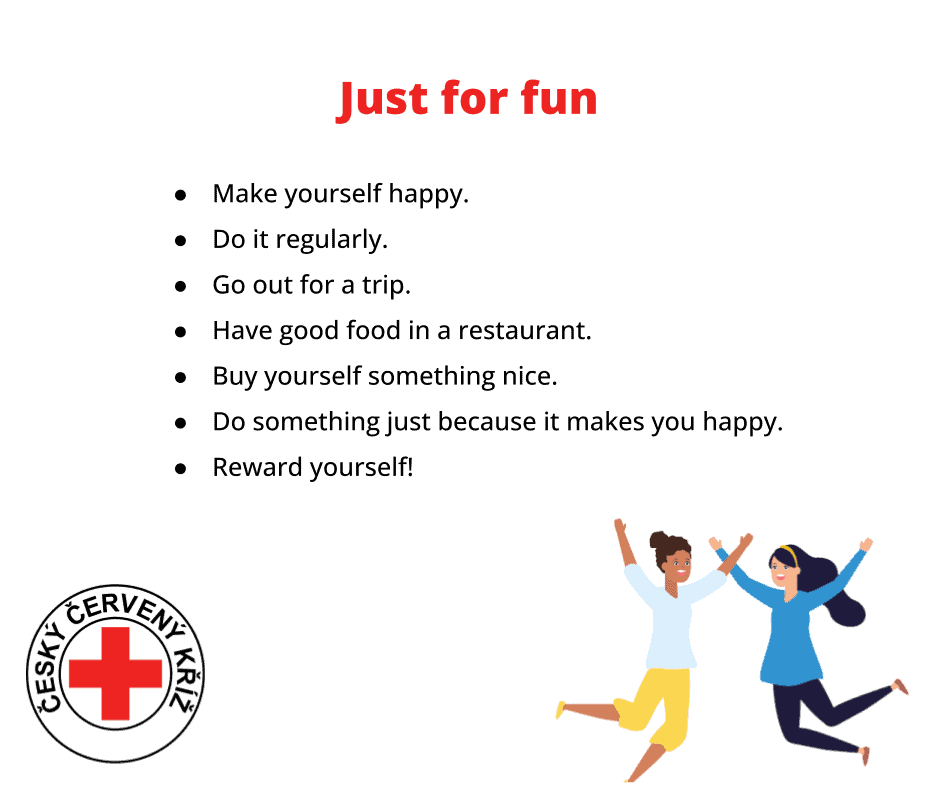
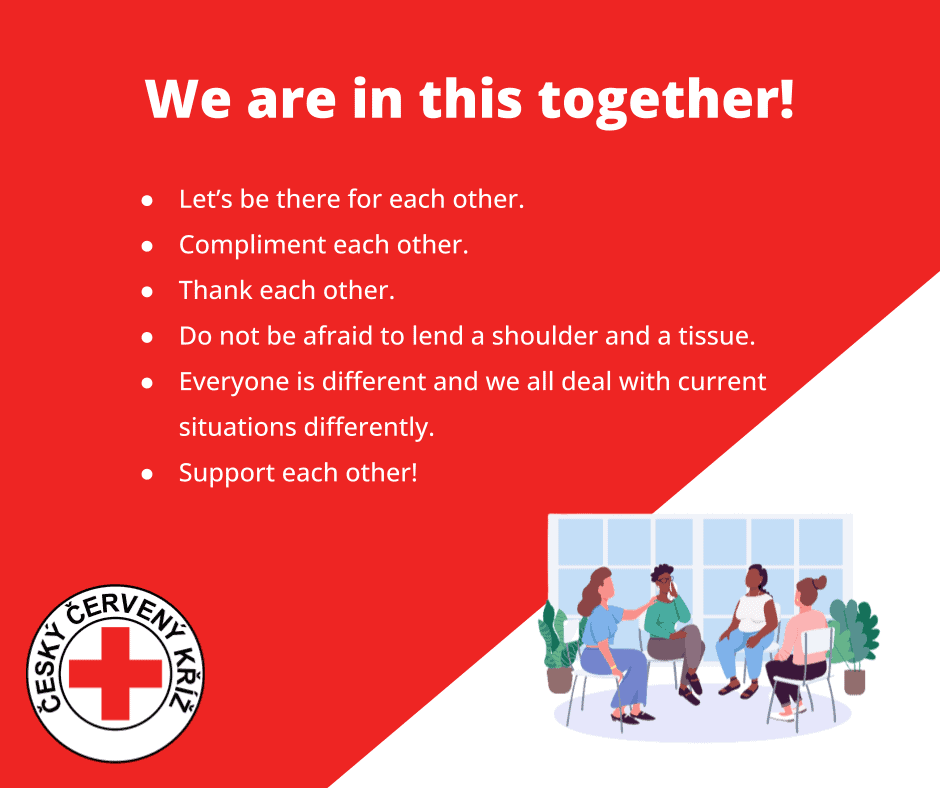
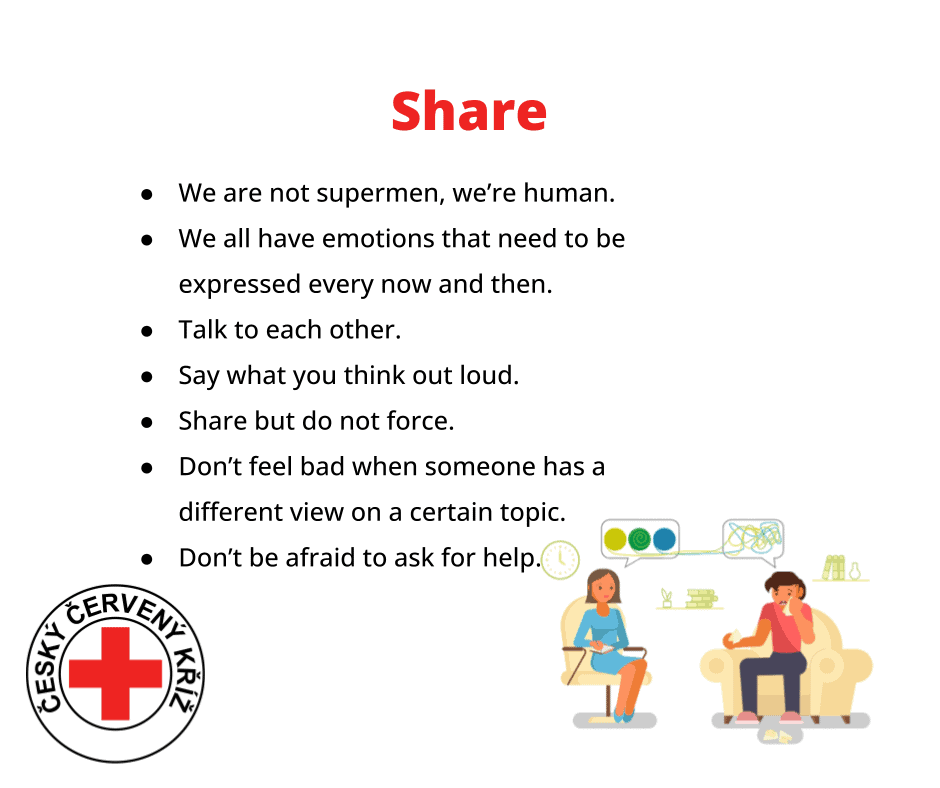
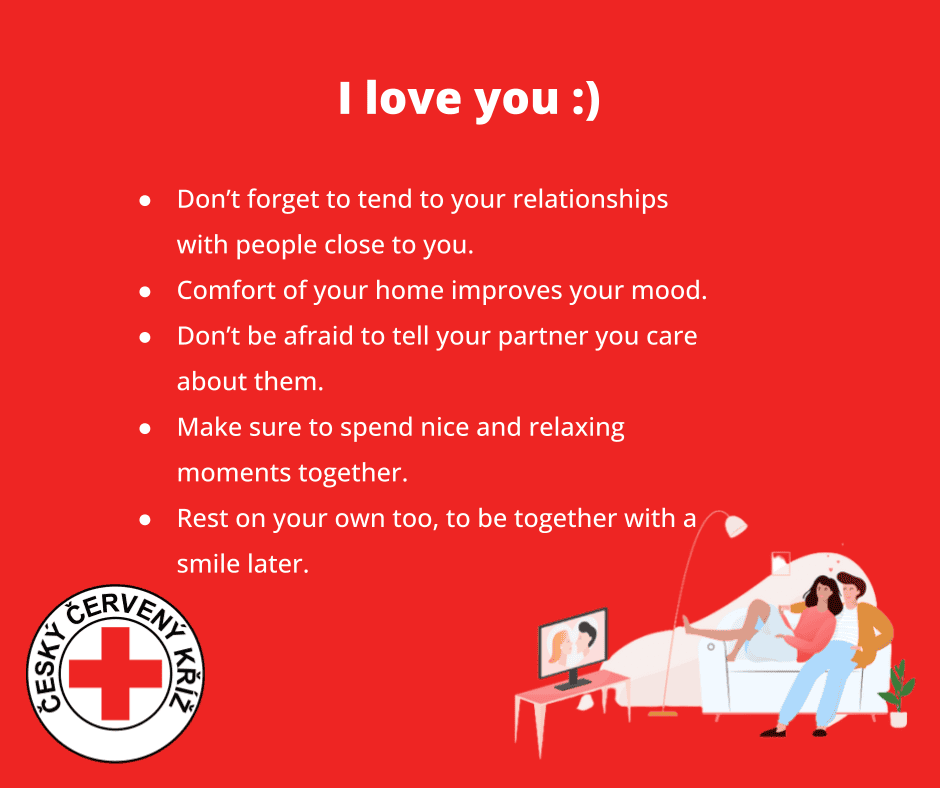
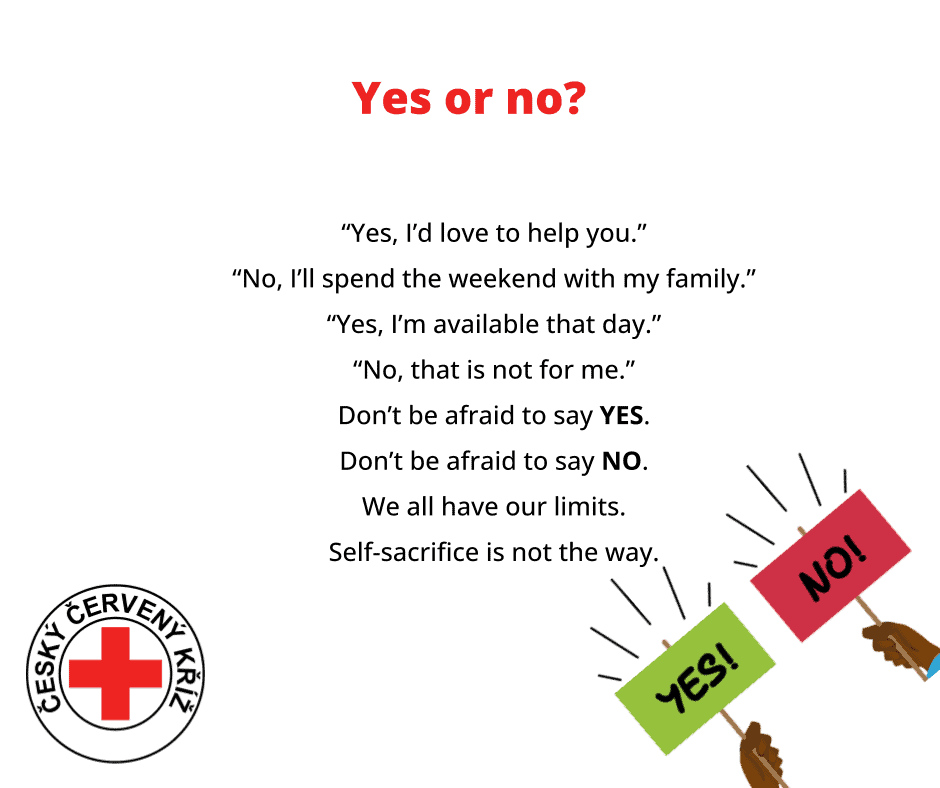
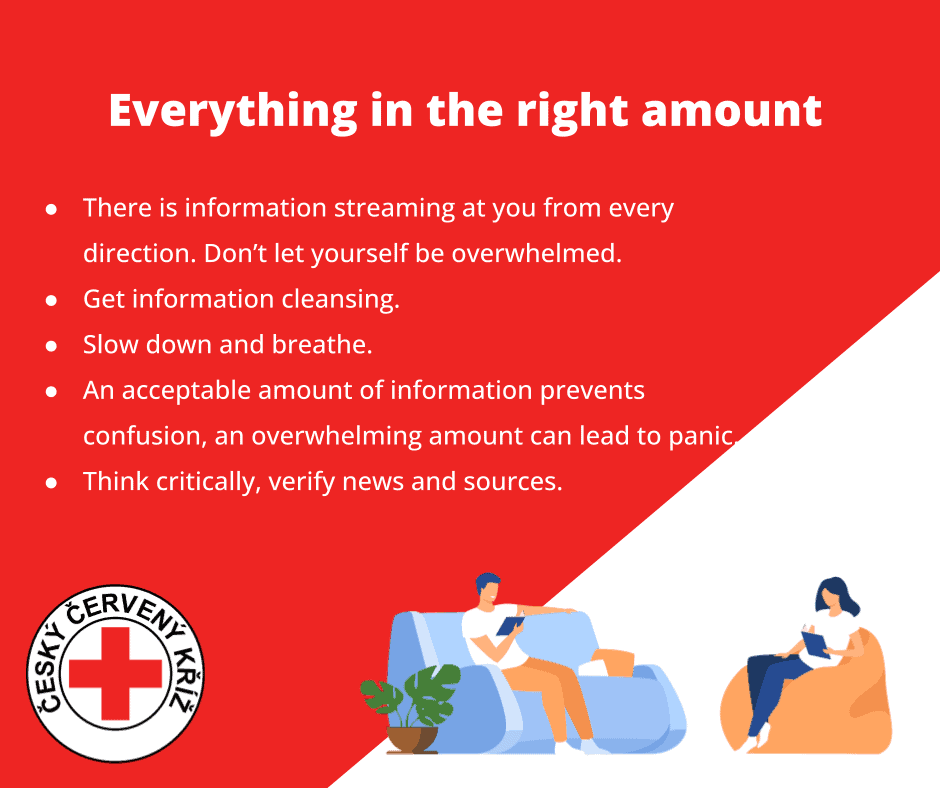
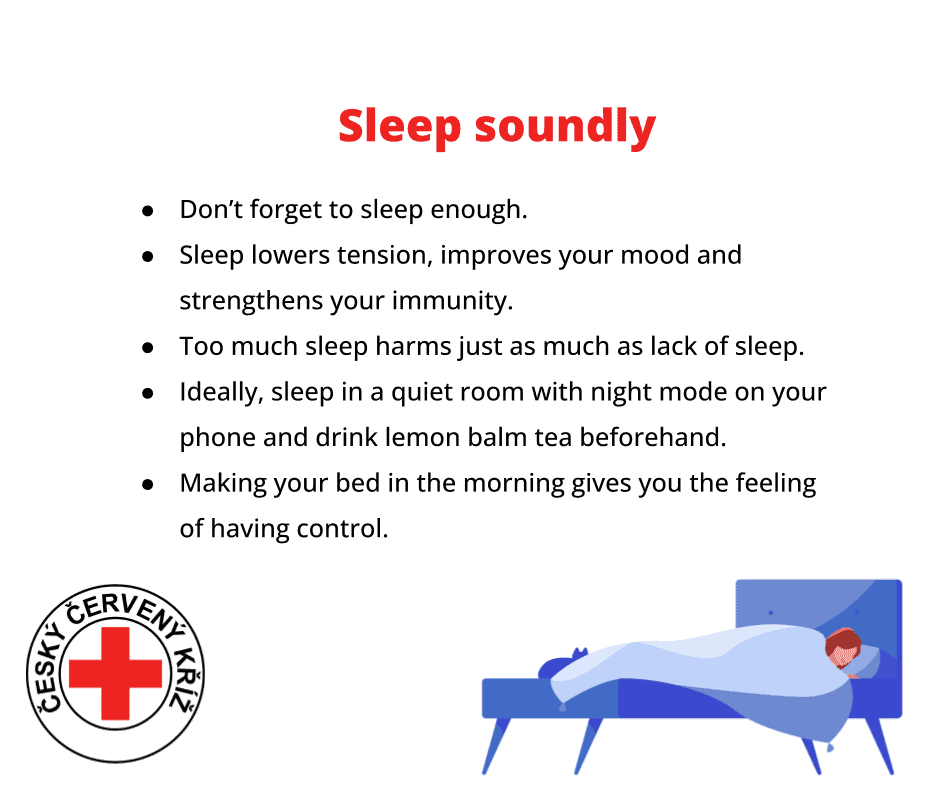
If you can speak English, you can also check out the Well-being Guide, produced by the International Federation of Red Cross and Red Crescent Societies (IFRC). You can download it in English and other languages here.
Wellbeing
When you want to calm down
When you feel overwhelmed
When you feel anxious or nervous
Strengthening of internal resources
Wellbeing
Not feeling well?
Stop scrolling for a while and sit back. Follow these easy 5 steps:
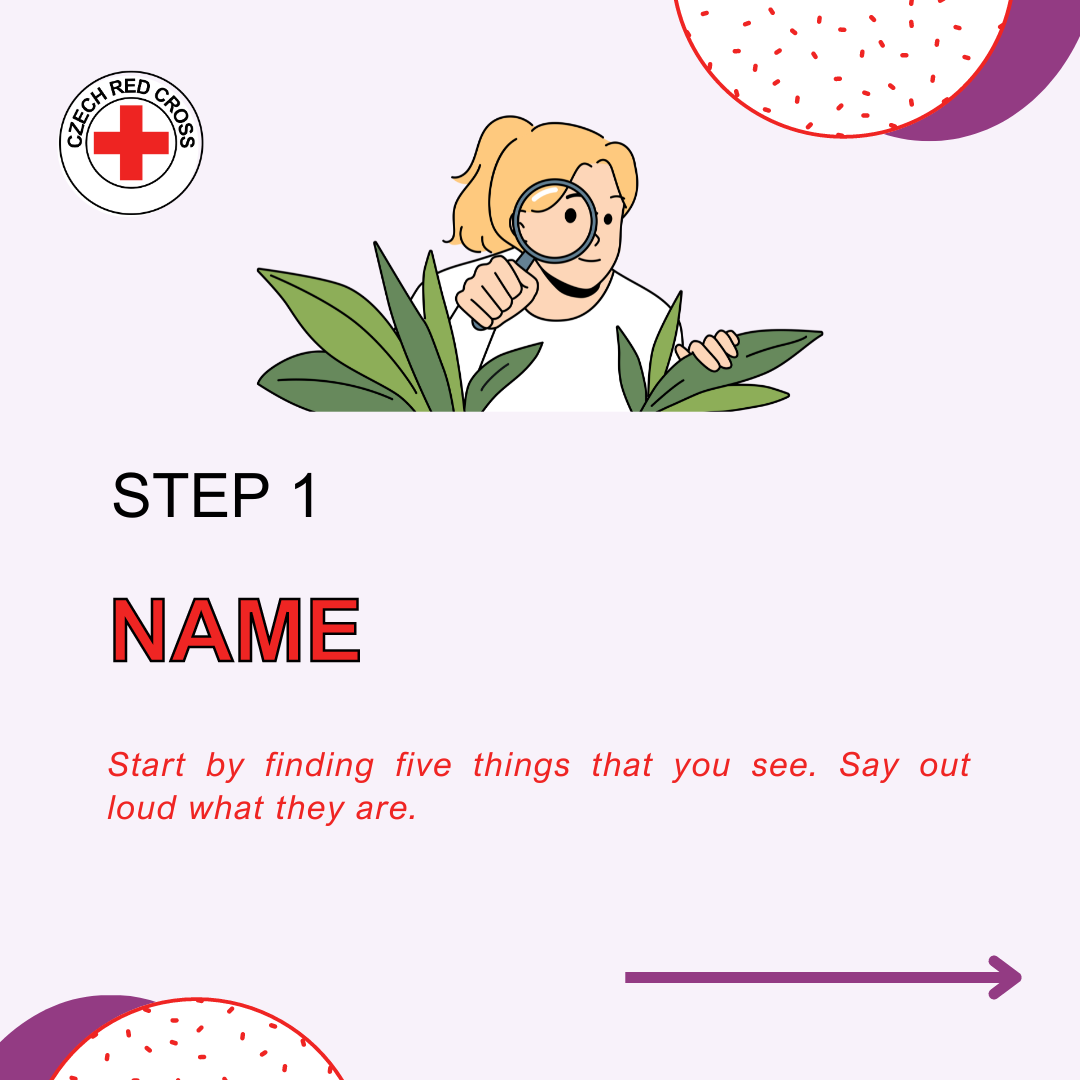
When you want to calm down
The ability to regulate your feelings and keep a calm mind is crucial not only for aid workers. However, in challenging environments or when faced with strong emotions or disturbing thoughts, it is difficult to keep a clear head and maintain the ability to make sound decisions.
When helping others, however, this is absolutely crucial.
That’s why it’s important to learn how to manage stress.
We’ve put together some exercises to help you do just that. By repeating them, you will be able to calm your mind even in the most challenging situations.
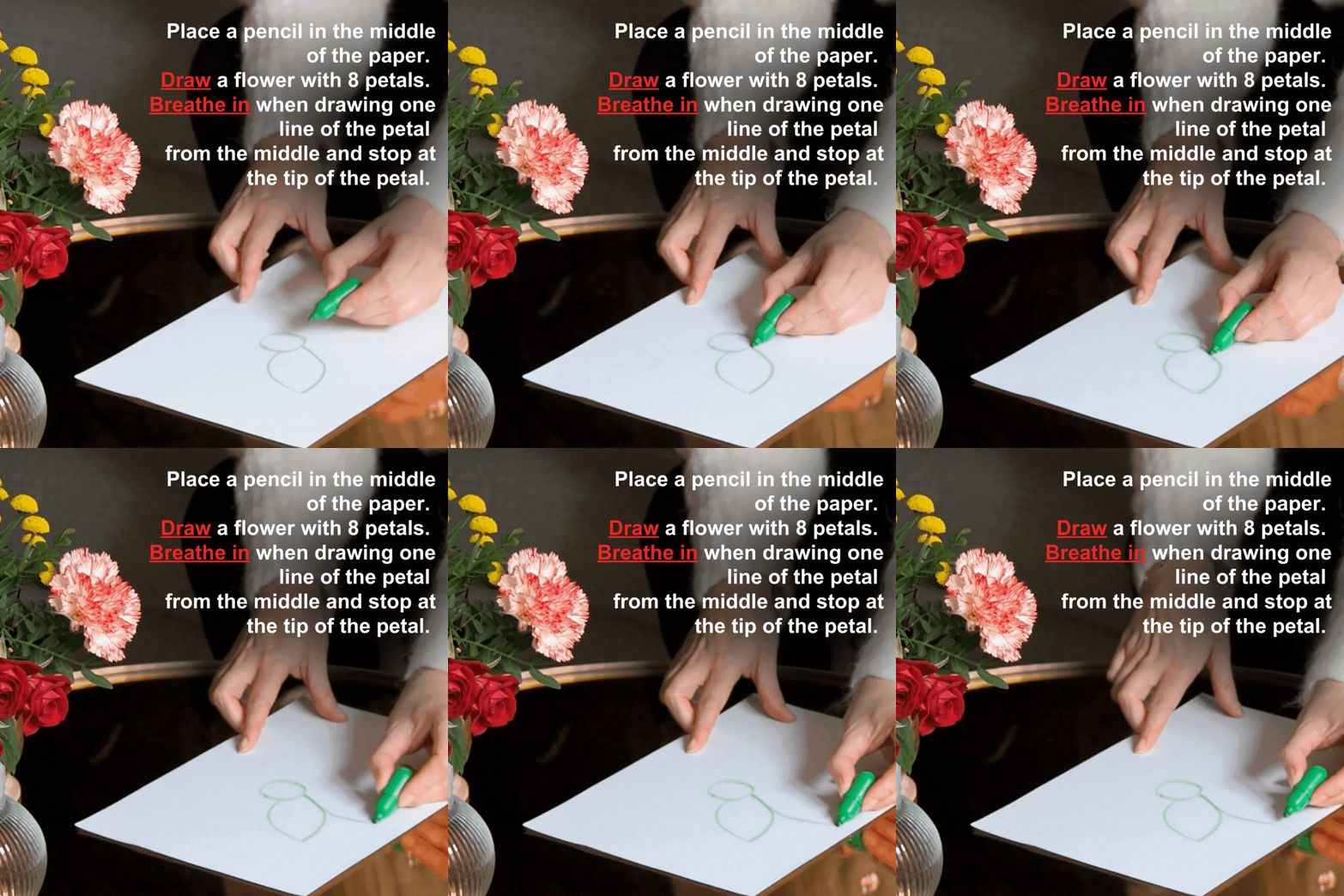
Try the first one!
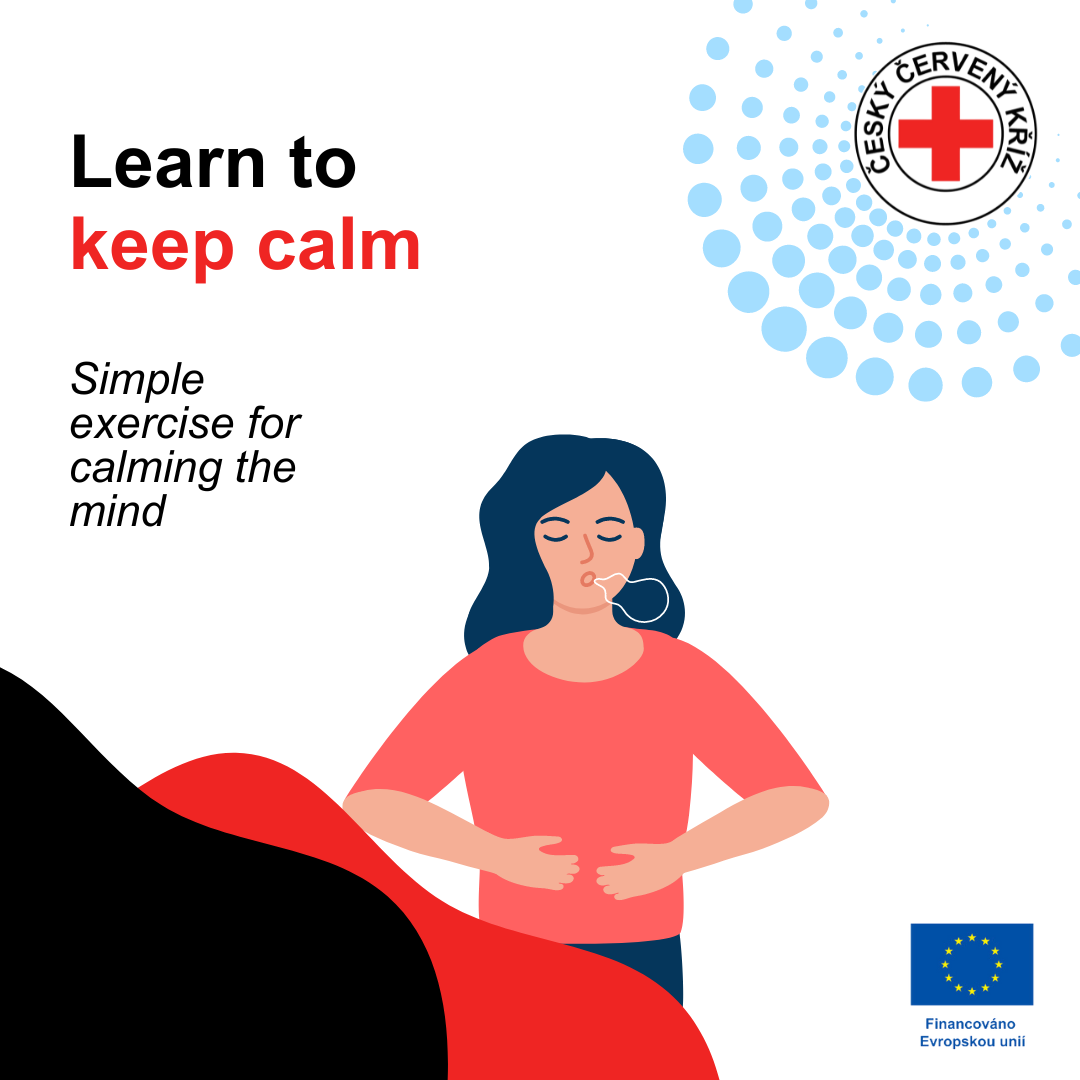


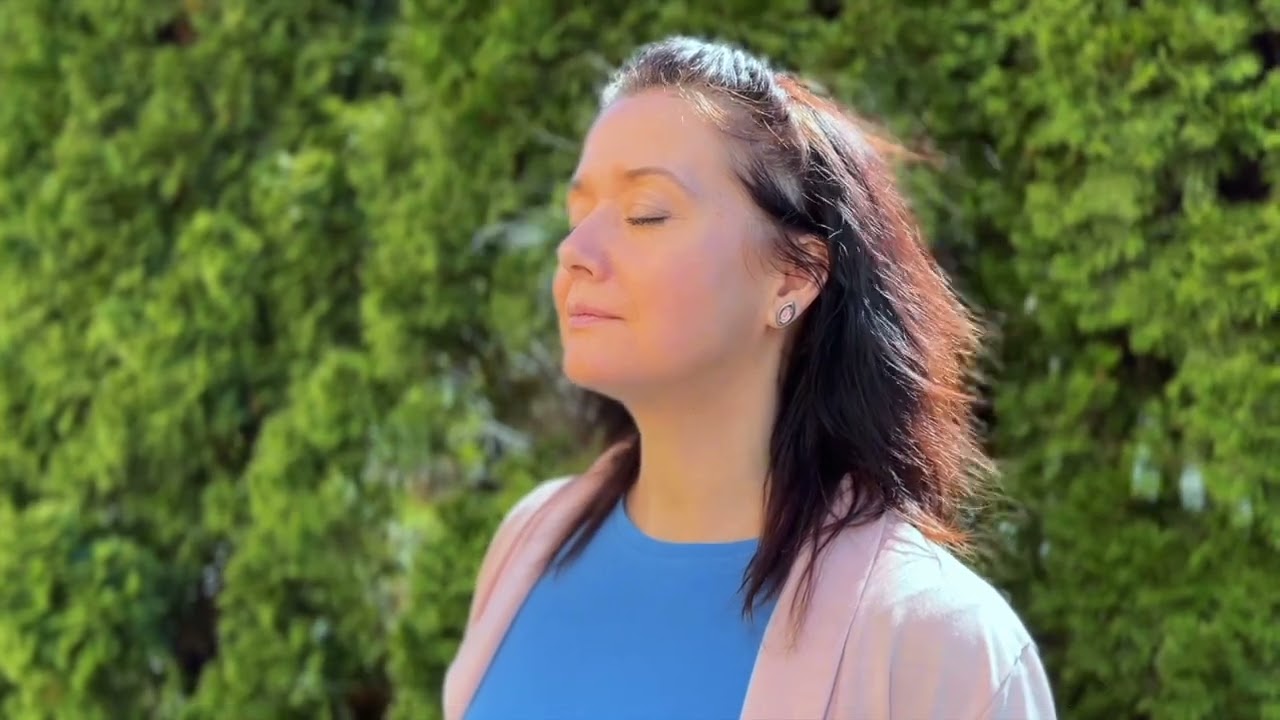
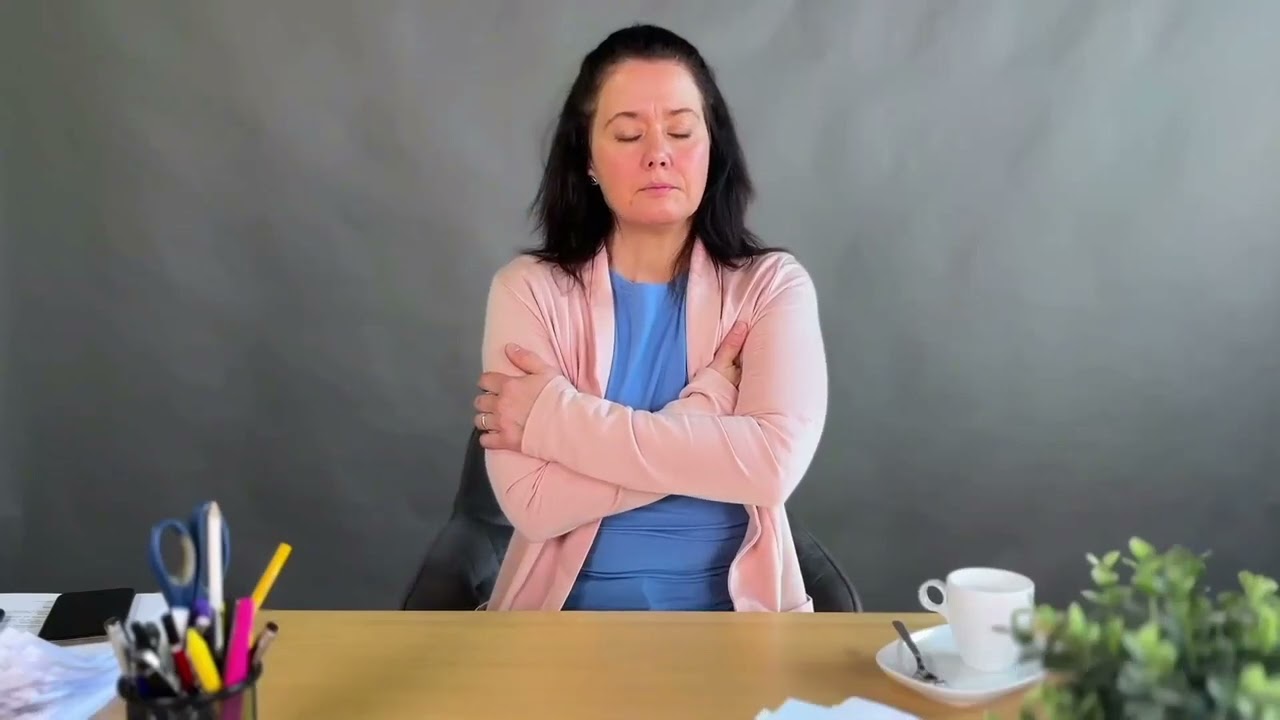
Do you ever feel overwhelmed? We have a trick for that!


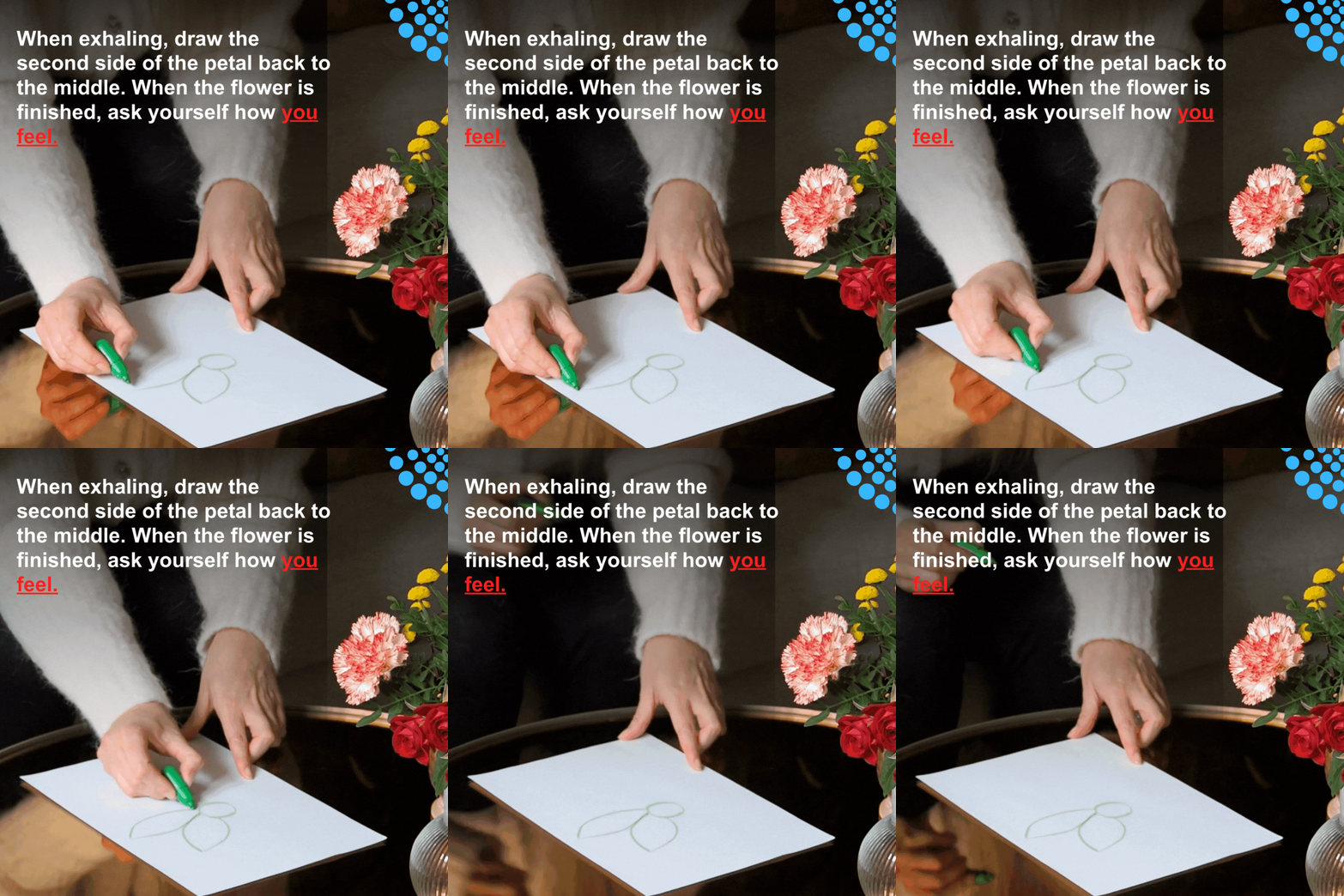
When you feel overwhelmed and upset
We’ll help you focus.
When you feel anxious or nervous


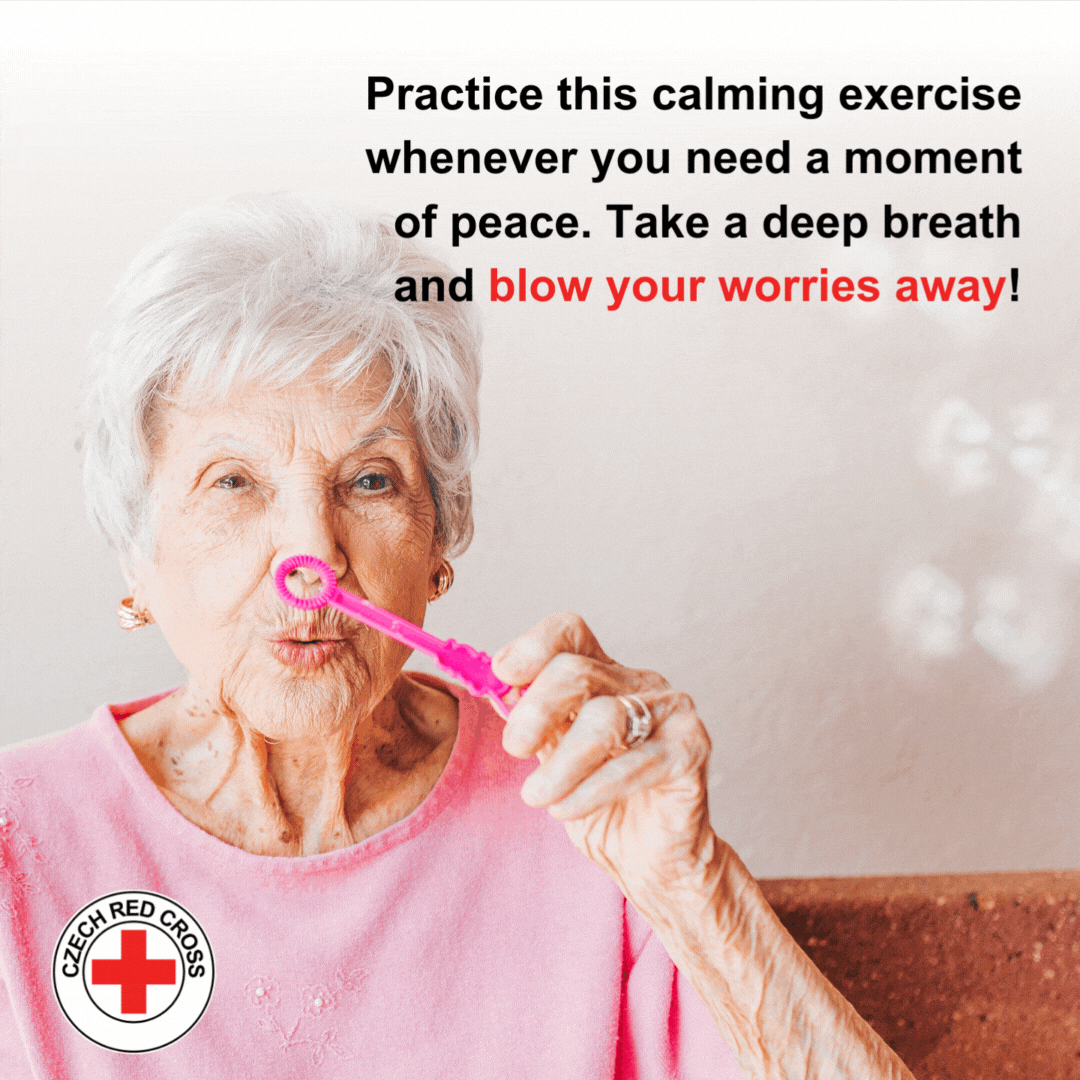
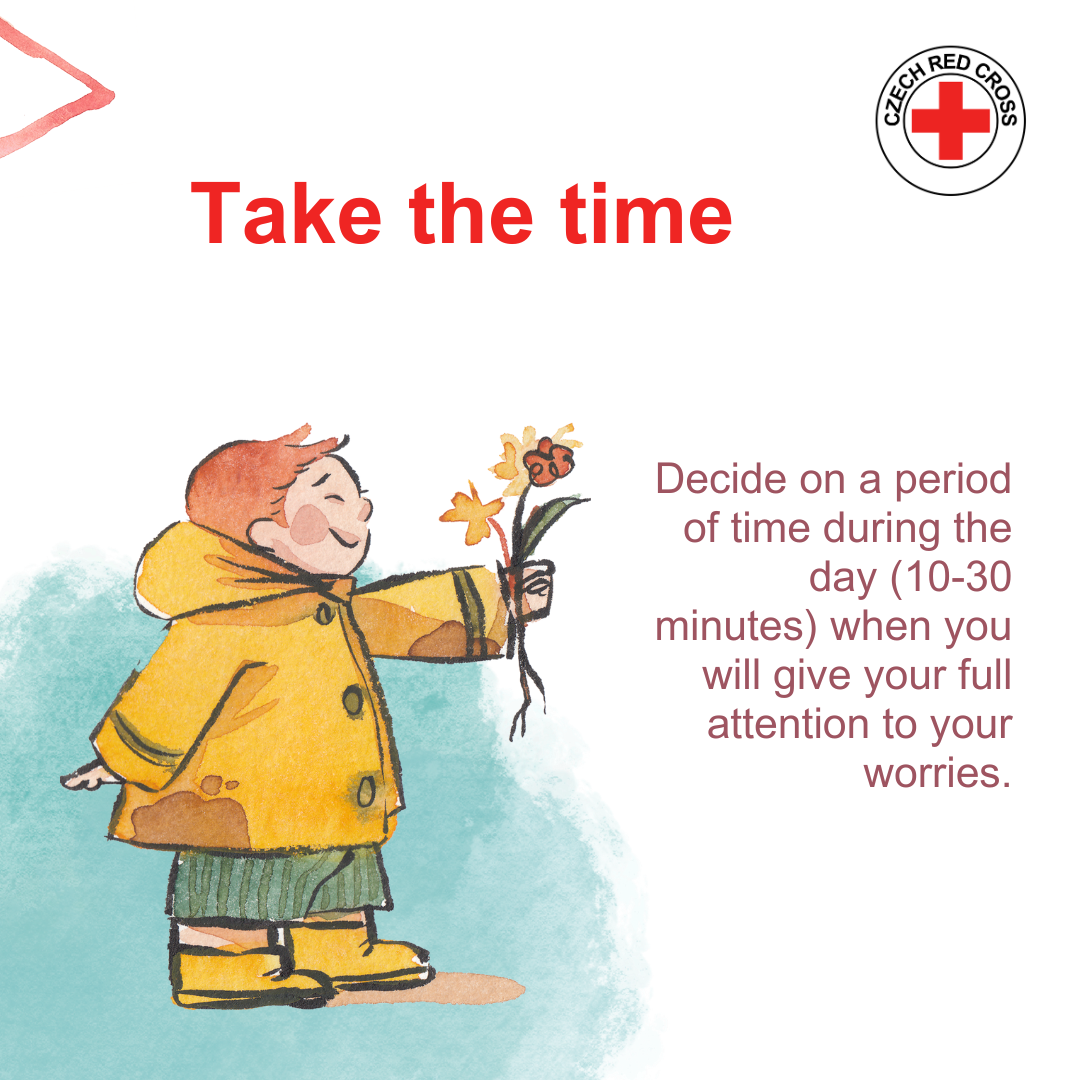
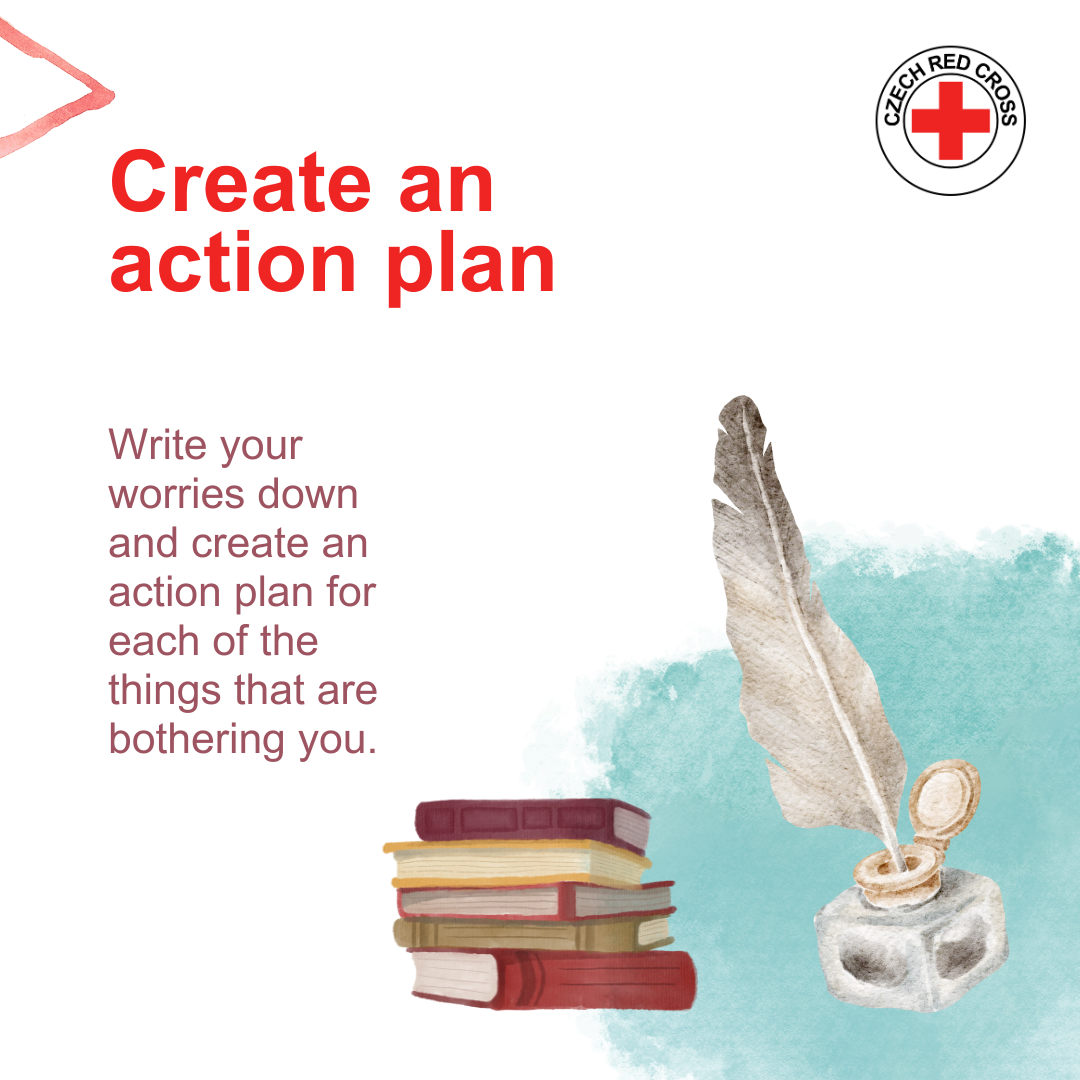
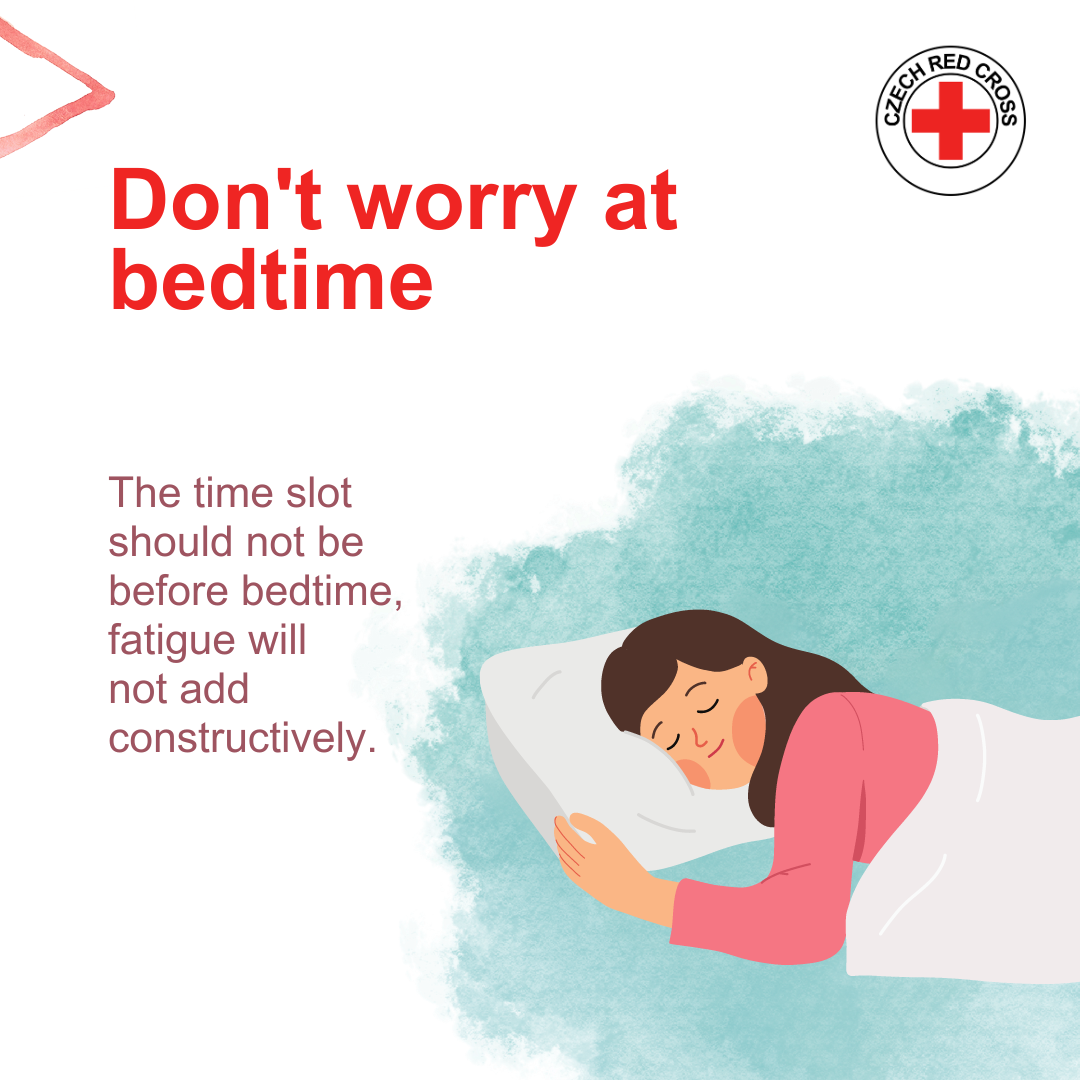
🙍Unfortunately, the tendency to worry and think about problems only increases when we focus on them.
Continually thinking about the worst case scenario keeps the mind busy, making it difficult to respond constructively and proactively, as well as come up with solutions to the concerns we have.
So how to manage worries more easily?🔻

Strengthening of internal resources
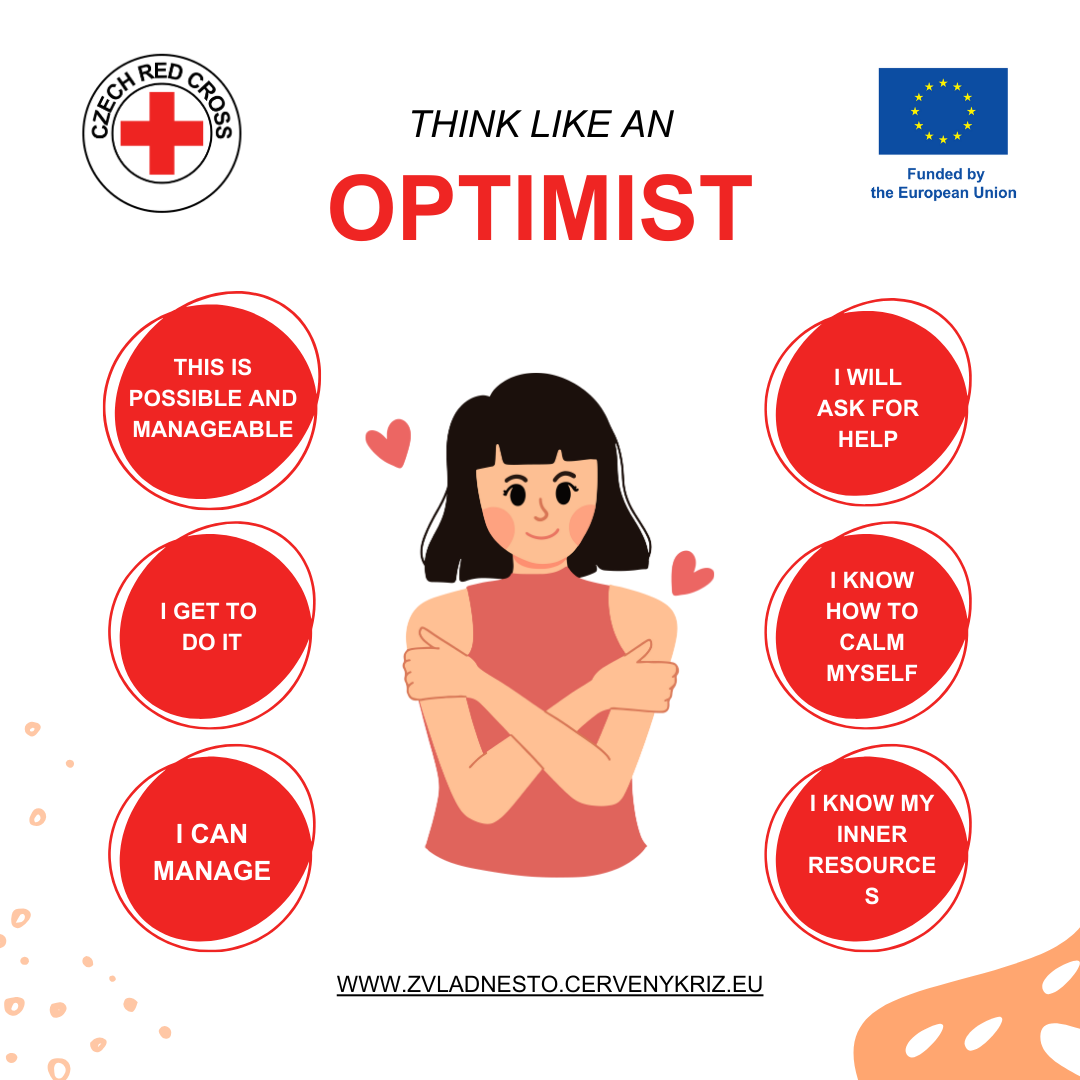
“I can handle this task”. A simple change of perspective that can often change our entire approach.
Optimism isn’t just a way of thinking, it’s a superpower! 💥
In times of pressure, it is natural to feel frustrated or annoyed.
But what if we flipped the script? 🔄
We have a few phrases for you to help you deal with everyday stressors gracefully and effectively. Learning to work with positivity can also protect you from high levels of stress.
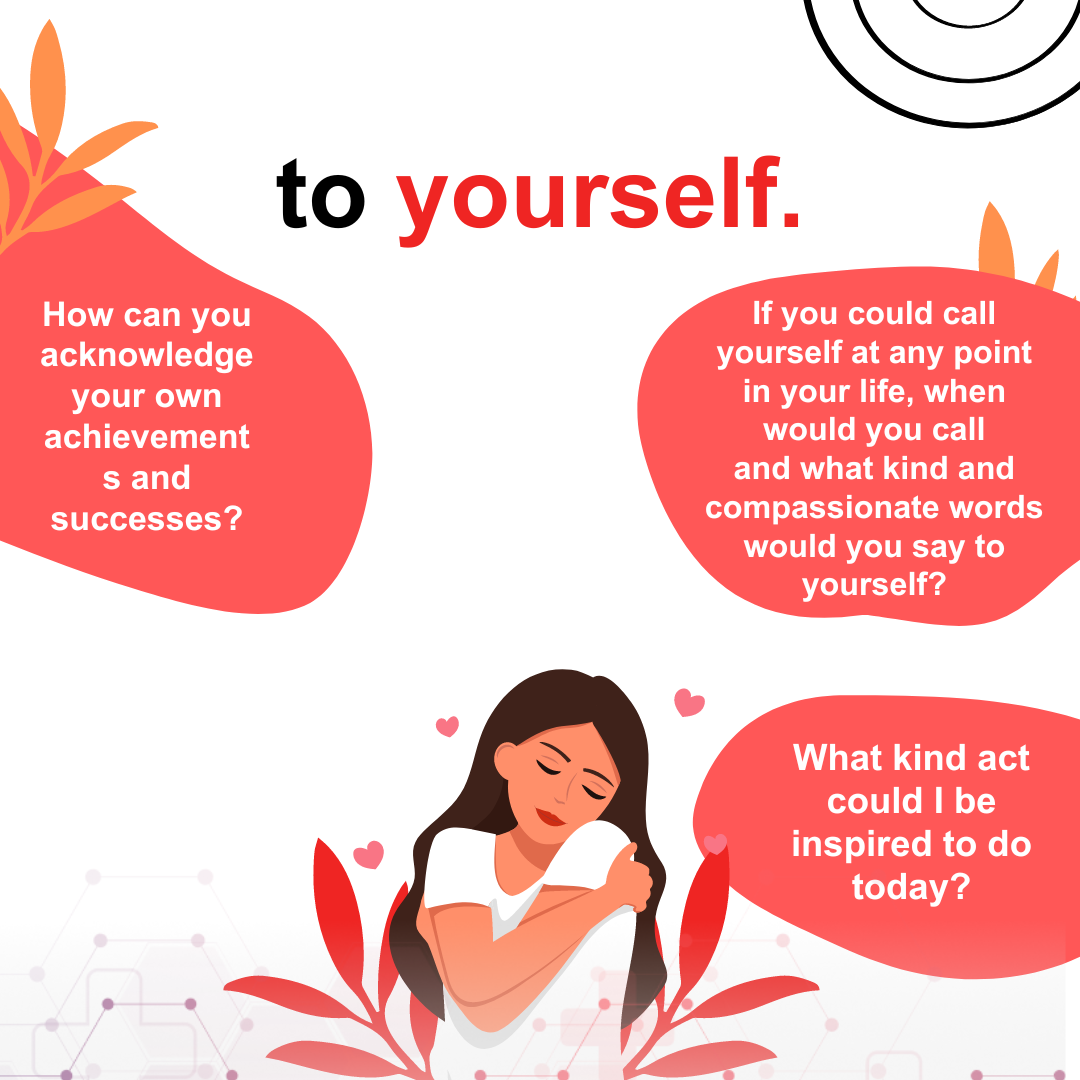
Are you kind? 💓

How does PSS work in the Czech Red Cross?
The public usually thinks of the Czech Red Cross in association with first aid and with volunteers helping in emergencies such as natural disasters or refugee crises. But in addition to first aid and emergency preparedness, our volunteers can also train PSS techniques and principles. They can use them in any intervention.
At the same time, we train individuals and teams of people among us who are dedicated to PSS in more depth and provide PSS as their main activity during emergencies, together with colleagues from other organisations or the Integrated Rescue System (IRS). Therefore, among us you will find crisis interventionists with comprehensive training, or peers ready to support colleagues in the field.
Where we have also acted as PSS support:

Floods Liberec
August 2020

Floods in Uničov and Šumperk regions
June 2020

Tornado in South Moravia
June 2021

Refugees from Ukraine
2022/2023

Accidents
